
Zhangjiajie National Forest Park Guide: Wulingyuan, Yuanjiajie & Routes
Zhangjiajie National Forest Park is worth at least two full sightseeing days if you want the famous pillar viewpoints without turning the visit into a race. One day can cover Yuanjiajie and Tianzi Mountain, but it leaves little protection against fog, queues or a missed connection. The first planning decision is therefore not which viewpoint to photograph; it is whether you can give the park one day or two.
Quick answer: Choose one full park day for a focused high-viewpoint visit, or two for more walking choices and a second weather window. Wulingyuan is a practical base. Use only the shuttle, elevator and cableway connections confirmed for your date. Prioritise Yuanjiajie for the classic “Avatar Mountains”, Tianzi Mountain for broad panoramas, and Golden Whip Stream for a quieter valley-level walk. Visit Tianmen Mountain on a separate day because it is a different scenic area near Zhangjiajie city.
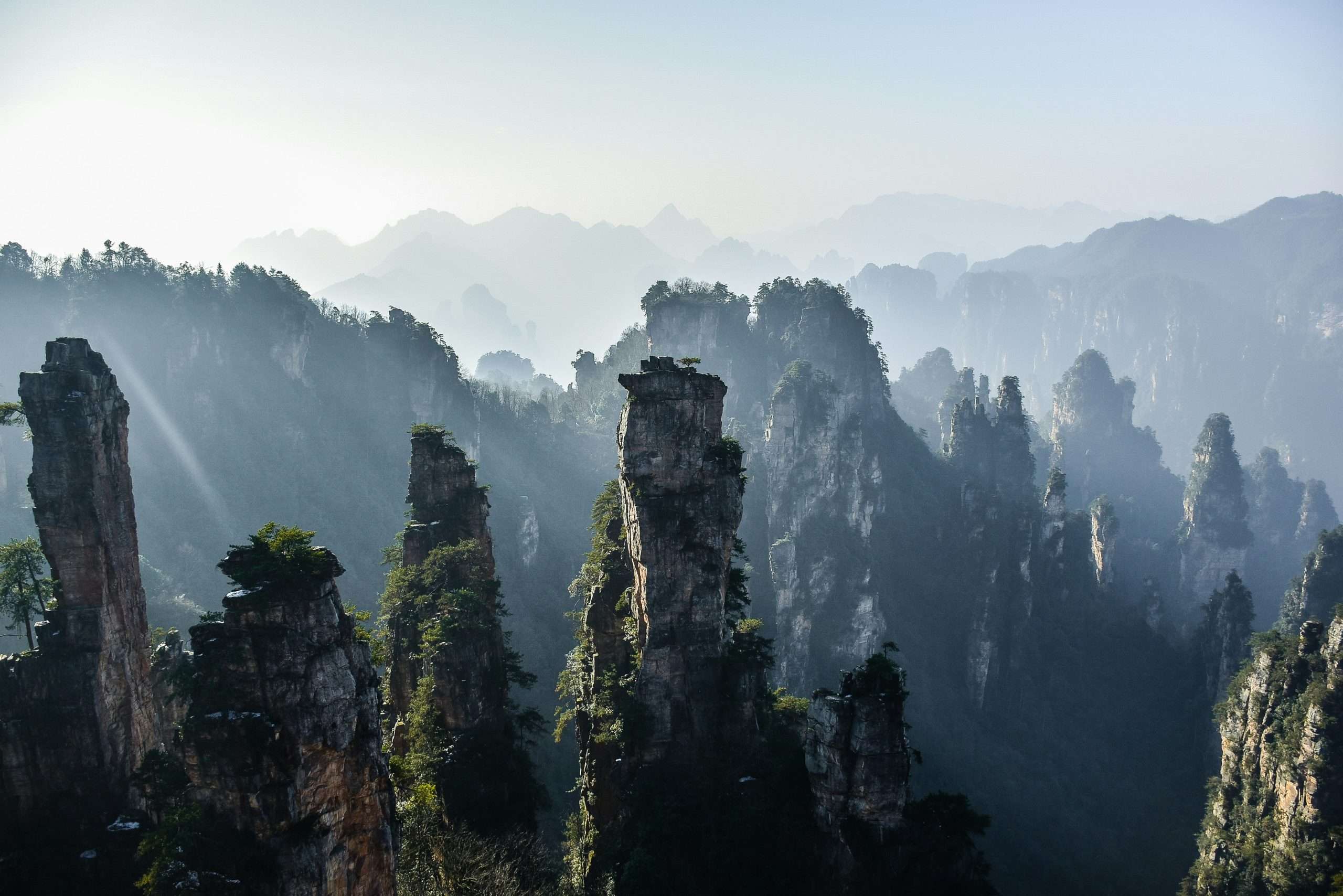
The landscape is genuinely large. UNESCO describes the wider Wulingyuan property as more than 26,000 hectares with over 3,000 narrow sandstone pillars and peaks, many exceeding 200 metres. That scale explains why a route matters more here than a long list of sights. See the UNESCO description of Wulingyuan for the protected landscape’s official context.
Is Zhangjiajie National Forest Park the same as Wulingyuan?
No. Zhangjiajie National Forest Park is one of the principal parts of the broader Wulingyuan Scenic and Historic Interest Area. Travellers often use “Zhangjiajie National Park” and “Wulingyuan National Park” as convenient shorthand, but the names do not describe precisely the same boundary.
Wulingyuan is the wider protected landscape
Wulingyuan includes several connected scenic areas and management zones, including Zhangjiajie National Forest Park, Yuanjiajie, Yangjiajie and Tianzi Mountain. The official Zhangjiajie UNESCO Global Geopark lists Yuanjiajie, Yangjiajie, Tianzi Mountain, Golden Whip Stream, Huangshizhai and Ten-Mile Gallery among its principal visitor areas.
For a visitor, the practical meaning is simple: one entrance ticket may open a large system, but it does not make every cableway, lift or route instantly adjacent. You still need to choose an entrance, follow the correct shuttle direction and understand which transport is included or paid separately at the time of travel.
Wulingyuan town is the most useful park base
Wulingyuan is also the name of the town beside the East Gate, sometimes called the Wujiayu entrance. Staying here puts you close to an efficient entry point and lets you begin before day visitors arrive from Zhangjiajie city.
The town is the practical choice for one or two national-park days. Zhangjiajie city is more convenient for Tianmen Mountain, the airport and the railway stations. Our Zhangjiajie destination page shows how the park fits into a longer private itinerary.
Tianmen Mountain and the Glass Bridge are separate
Tianmen Mountain is near Zhangjiajie city and has its own timed ticket and mountain transport. Zhangjiajie Grand Canyon Glass Bridge is east of Wulingyuan and is also separately ticketed. Neither attraction is a quick walking extension of Yuanjiajie.
This distinction prevents the most common itinerary mistake: placing Yuanjiajie, Tianmen Mountain and the Grand Canyon Glass Bridge in one day because they all appear under “Zhangjiajie” online. Treat them as three separate sightseeing zones.
Which places should you prioritise inside Zhangjiajie National Forest Park?
First-time visitors should prioritise Yuanjiajie, Tianzi Mountain and either Golden Whip Stream or Ten-Mile Gallery. These areas give you three different perspectives: close views of pillars from cliff platforms, broad mountain panoramas, and a valley-level walk beneath the peaks.
Yuanjiajie for the classic pillar views
Yuanjiajie is the area most closely associated with the landscapes international travellers call the Avatar Mountains. The main walking circuit links cliffside viewpoints such as the Natural Bridge and the pillar commonly promoted as Hallelujah Mountain.
The viewpoints are impressive, but the path can become congested. Arrive early or place Yuanjiajie after the first rush if your guide can adapt the sequence. For the story behind the scenery and more photography advice, read our Zhangjiajie Avatar Mountains guide.
Bailong Elevator as transport, not a whole destination
Bailong Elevator moves visitors quickly between the lower valley and the high Yuanjiajie area. Check operating conditions, access requirements and queues for your visit date. Its greatest value is the vertical distance it saves, not the few moments inside the lift.
Use it when the route benefits from an ascent at this side of the park. Do not build the whole day around riding it in both directions. A one-way flow through Yuanjiajie towards Tianzi Mountain usually avoids unnecessary backtracking.
Tianzi Mountain for wide panoramas
Tianzi Mountain feels more open than Yuanjiajie. Instead of focusing on one pillar, its viewpoints reveal layers of peaks and ridges receding into the distance. Visibility matters: clear weather brings depth, while moving mist creates dramatic fragments of landscape.
The Tianzi Mountain Cableway is a useful way to descend towards the East Gate side. Cableway maintenance can alter routes, so check the park notice on your travel day and keep an alternative shuttle or walking plan.
Golden Whip Stream for a lower, gentler perspective
Golden Whip Stream follows a wooded valley beneath the sandstone pillars. It is not step-free and a long out-and-back walk can still be tiring, but selected sections are gentler than repeatedly climbing mountain stairs.
Choose it when your group values forest shade, water and a slower pace. It also works well on a day when high viewpoints are hidden by cloud. The scenery changes from “looking across the pillars” to “standing at their base”, which is why the lower route does not feel repetitive.
Ten-Mile Gallery for a flexible second-day section
Ten-Mile Gallery provides another ground-level experience and can be shortened according to energy and weather. It is often paired with the East Gate side of the park. The name should not be read as a precise walking requirement; travellers can choose how much of the area to explore and whether available scenic transport suits their needs.
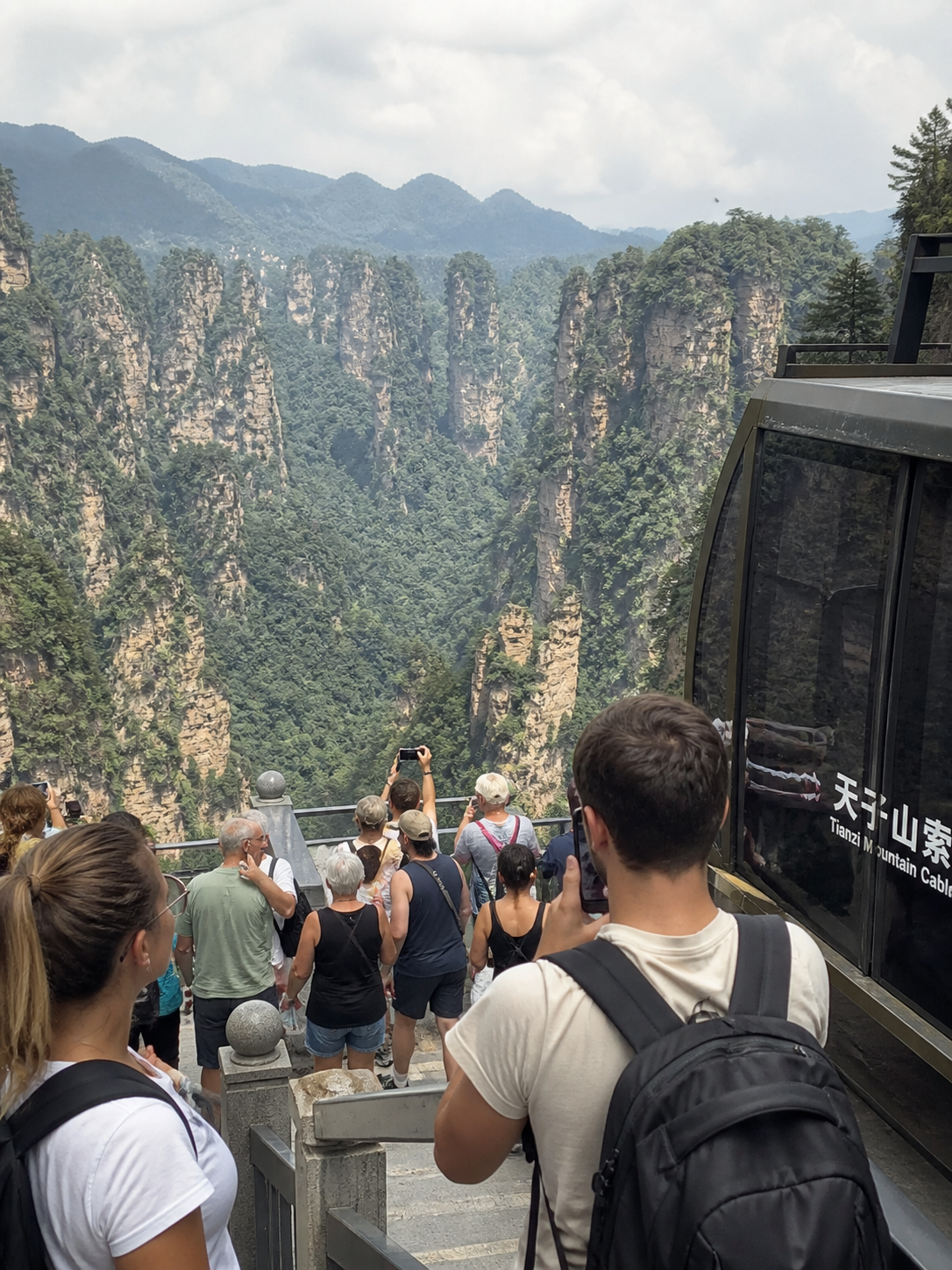
Can you see Zhangjiajie National Forest Park in one day?
Yes, but only as a highlights day. One possible one-day route, when its transport connections are operating, is East Gate to Bailong Elevator, Yuanjiajie, park shuttle to Tianzi Mountain, then cableway down. Confirm the entrance, ticket product and last return connection before committing to this sequence. It captures the signature high viewpoints without pretending to cover the whole park.
A realistic one-day route
| Decision point | Recommended choice | Why it works |
|---|---|---|
| Start | Wulingyuan East Gate | Convenient for the Bailong side and an early entry |
| Ascend | Bailong Elevator | Saves a long vertical climb and reaches Yuanjiajie efficiently |
| Main focus | Yuanjiajie walking circuit | Delivers the best-known pillar scenery |
| Transfer | Park shuttle to Tianzi Mountain | Links two high areas without returning to the valley |
| Finish | Tianzi Mountain Cableway | Creates a one-direction route towards the East Gate side |
Allow a full sightseeing day, not a half-day. Timed admission, bag checks, shuttle waits and walking between viewpoints take more time than a map suggests. Carry your passport and keep your day pack light.
What one day leaves out
You will probably skip Golden Whip Stream, Ten-Mile Gallery, Yangjiajie and Huangshizhai. That is a valid trade-off for a short stay, but it means you have seen a strong sample rather than “completed” the park.
If your China itinerary is tight, the 3-day Zhangjiajie highlights private tour combines one concentrated forest-park day with Tianmen Mountain on another day. Check your actual arrival and departure before choosing it: three calendar days do not always give you three full sightseeing days.
What to do if the summit is in cloud
Do not assume a misty forecast makes the day worthless. Moving cloud can produce the most atmospheric views, while dense stationary fog may hide the pillars completely. If visibility is poor, begin with a lower route such as Golden Whip Stream and reassess the high viewpoints later.
This flexibility is one reason two park days perform better than one. You gain another weather window instead of gambling the entire visit on a single morning.
What is the best two-day Zhangjiajie National Park itinerary?
The best first-time plan uses one day for the high Yuanjiajie–Tianzi route and one day for lower forest scenery. This avoids repeating the same type of viewpoint and gives the itinerary room to respond to fog or fatigue.
Day 1: Yuanjiajie and Tianzi Mountain
Enter early from Wulingyuan. Ascend towards Yuanjiajie via Bailong Elevator, complete the main cliffside circuit, then continue by park shuttle towards Tianzi Mountain. Descend by cableway if it is operating and suits the day’s direction.
This is the more structured day. Start with a clear meeting point, know the last practical return connection, and avoid adding remote side routes unless the group is moving ahead of schedule.
Day 2: Golden Whip Stream and Ten-Mile Gallery
Make the second day quieter. Walk a selected section of Golden Whip Stream, then add Ten-Mile Gallery or another lower route based on energy. Photographers may instead return to a high area if the weather improves dramatically.
The current four-day Zhangjiajie, Tianmen and Fenghuang tour has one forest-park day, plus Tianmen Mountain, the Grand Canyon area and ancient towns. It does not automatically provide the two-day park plan described here. If two full forest-park days are your priority, ask us to adjust the sightseeing balance before choosing the itinerary.
How to adapt the route for rain or maintenance
Check official notices before entering. The geopark publishes temporary lift, cableway and road updates; a maintenance closure may reverse the most efficient direction. Rain also changes the decision. Light rain can create mist and richer forest colour, while storms or high winds may affect exposed paths and transport.
Keep the destination priorities fixed but the order flexible. Yuanjiajie, Tianzi Mountain and a lower valley remain the goals; the exact connection between them can change.
Where should you stay and how do you reach the park?
Stay in Wulingyuan for forest-park days. Plan the transfer from your exact railway station, airport or city hotel, then add time for luggage and check-in. Use the Zhangjiajie station and transport guide to distinguish the arrival points; confirm actual transport for your date.
Arriving by high-speed train
Most high-speed services use Zhangjiajie West Railway Station, not the older downtown Zhangjiajie Railway Station. Check the Chinese and English station name on your ticket rather than relying on “Zhangjiajie station” in conversation.
Tourist transport links Zhangjiajie West with Wulingyuan and other scenic areas. A 2024 Hunan Government transport notice describes dedicated tourist lines connecting downtown, West Railway Station, Wulingyuan, the national forest park and the Grand Canyon. Timetables change, so confirm locally on arrival.
Arriving by air or staying downtown
Zhangjiajie Hehua International Airport is in the city zone, much closer to Tianmen Mountain than to Wulingyuan. A private transfer is simplest after an evening flight because it avoids changing between city and tourist buses with luggage.
If you arrive early, travel directly to Wulingyuan for the night before your park visit. If Tianmen Mountain is your final sightseeing day, moving to a city hotel the previous evening can simplify departure.
Moving inside the park
The park’s environmental shuttles connect major transfer points, but they do not remove all walking. Expect queues, standing, steps and several short walks between platforms and transport stations. Keep the day’s route written in Chinese as well as English, or travel with a guide who can confirm the correct shuttle.
What should families, older travellers and photographers know?
Zhangjiajie can suit families and older travellers, but the right route matters more than age alone. Lifts, cableways and shuttles reduce climbing; they do not create a completely step-free visit.
Plan for walking in short sections
Ask each traveller what “comfortable walking” means in minutes, not just whether they can walk. One person may handle two hours on level paths but struggle with ten minutes of steep stairs. Use that answer to choose between a full Yuanjiajie circuit, a shortened viewpoint loop or more time in the valley.
Bring supportive shoes, a rain layer, water, sun protection and any personal medication. Large suitcases belong at the hotel or in a transfer vehicle, not on park shuttles.
Give children clear boundaries
Viewpoints have barriers, but paths can be busy and the drops beyond them are real. Keep young children close at cliff platforms and on crowded shuttle queues. Do not feed or approach macaques; food and loose bags can attract them.
Give photography two weather windows
Photographers benefit disproportionately from two park days. Clear skies reveal depth; broken mist separates the pillars into layers; heavy fog can hide everything. A second morning lets you adapt rather than force every image into one fixed schedule.
For a broader western Hunan journey, the 5-day Zhangjiajie, Furong and Fenghuang tour adds contrasting town and night photography after the mountain days. The 6-day Zhangjiajie, Fenghuang and Changsha route suits travellers who want an easier link through Changsha.
What do first-time visitors ask about Zhangjiajie National Forest Park?
How many days do I need in the park?
One day covers the famous high viewpoints; two days are better for high and low scenery with weather flexibility. Give Zhangjiajie as a destination three to four days if you also want Tianmen Mountain.
Is the Bailong Elevator compulsory?
No. It is a route tool, not a compulsory attraction. Other combinations use cableways, shuttles and walking, but they may take longer. Choose the direction that fits current operations and your group’s mobility.
Is Tianmen Mountain inside the national forest park?
No. Tianmen Mountain is a separate scenic area near Zhangjiajie city with its own ticket and timed route. Plan it on another day.
Should I book attraction tickets in advance?
Timed entries and passport details are common, especially in busy periods. Book early enough to protect your preferred day, then recheck the official operating notice. Avoid treating a screenshot of last year’s rules as current policy.
What is the best month to visit?
Spring often brings green vegetation and mist; autumn often offers comfortable walking and clearer views. Summer is lush but busier, warmer and wetter. Winter is quieter but can bring cold conditions and operational changes. No month guarantees visibility.
Can I visit without a guide?
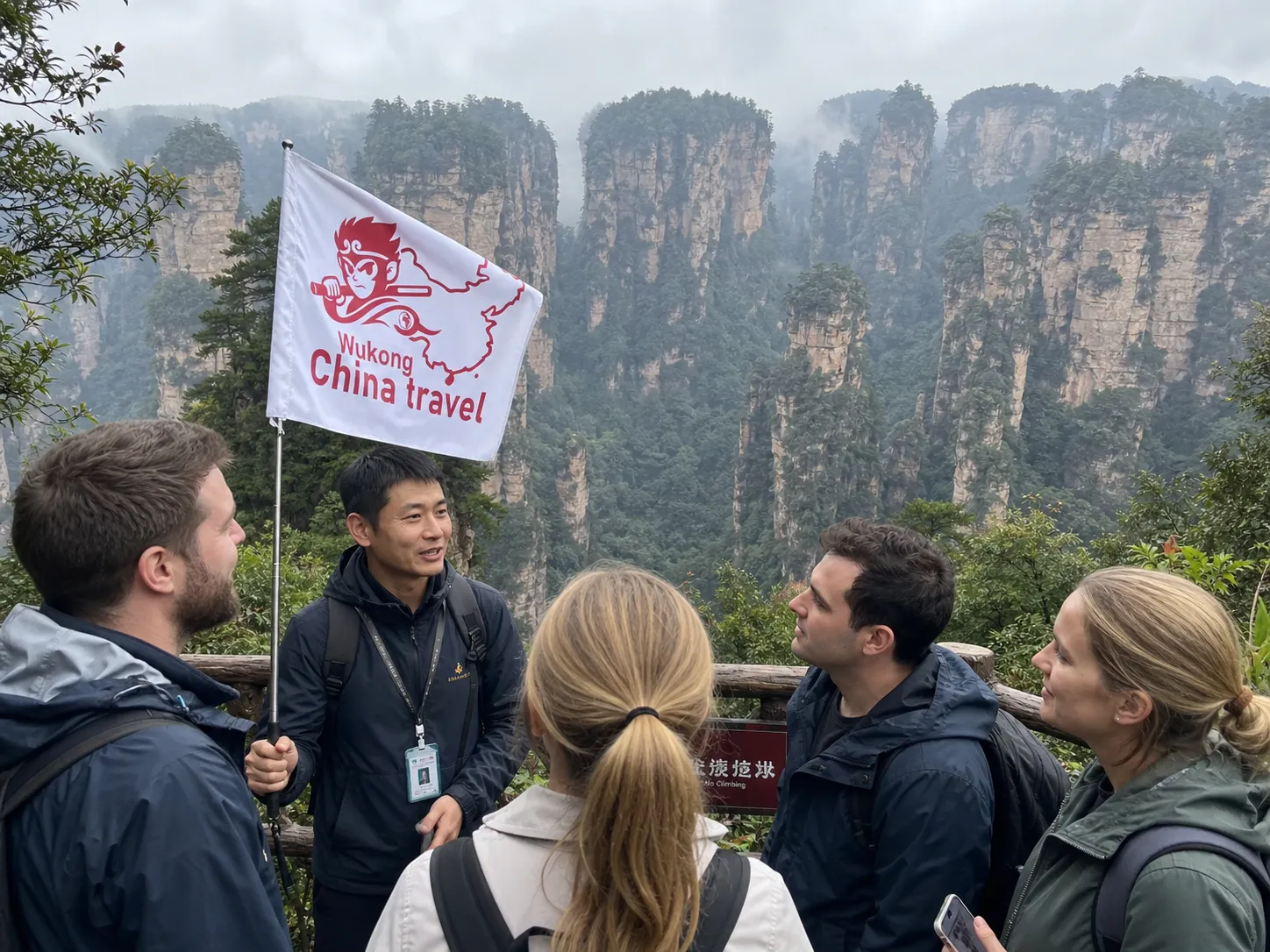
Yes, if you are comfortable navigating Chinese transport signs, timed admission and park shuttles. A guide is most valuable when your time is short, your group has different walking abilities, or weather requires the route to change quickly.
The best Zhangjiajie National Forest Park plan is the one that protects the three experiences that matter most to you, then removes unnecessary backtracking. For most first-time visitors, that means Yuanjiajie, Tianzi Mountain and one lower valley over two days. If you would like those pieces adjusted around your train, flight and walking pace, ask Wukong China Travel for a customised Zhangjiajie plan.
Planning review: 23 October 2026. Confirm operating transport and ticket arrangements for your visit date.